800V Busbar Insulation
Busbar insulation for 800V EV architectures and high-voltage switchgear — heavy-wall heat shrink tubing, fiberglass and PTFE sleeving, sized to your busbar drawing and made in our own factories.
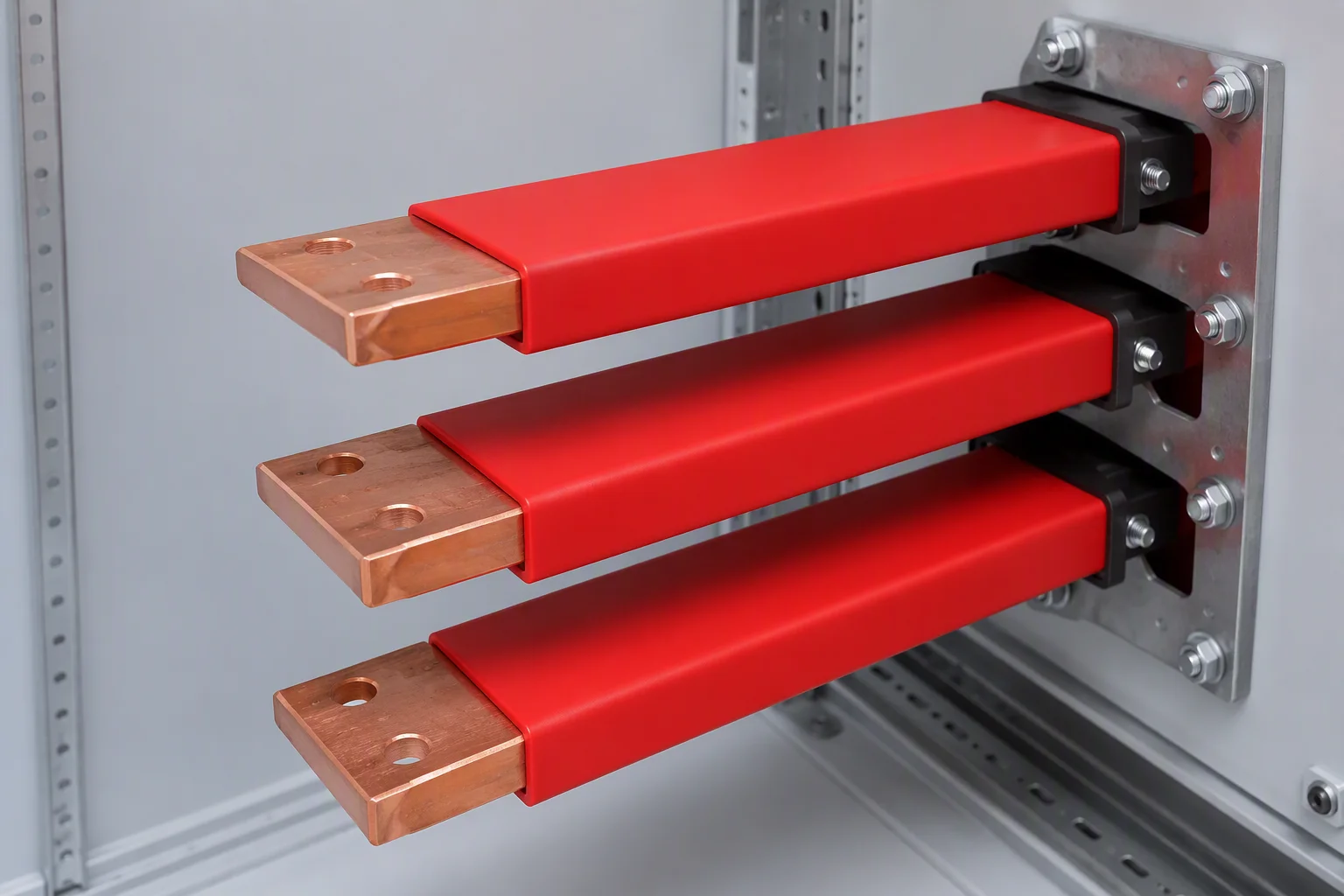
What we supply
We make this material ourselves. Heat-shrink tubing and cable accessories come out of our Suzhou factory; fiberglass, silicone and fluoropolymer sleeving comes out of our Anji factory. WELLELE is the export brand for both, and every shipment goes out with its matching test report — dielectric strength, flammability and dimensions, measured on your actual batch, not copied from a brochure.
Key reference data
Voltage class
Shrink ratios
PTFE sleeving
Flame retardancy
UL certification
Documentation
Selection is confirmed against your drawing: busbar cross-section, peak voltage, creepage and operating temperature. If you need a value on paper before ordering, ask — the datasheets are ours to send.
Why 800V changes the specification
The jump from 400V to 800V battery architectures raises voltage stress on busbar insulation. Three things change:
Voltage standoff
Partial discharge
Thermal duty
Send the busbar cross-section, voltage and clearance requirement. We match the insulation option and size before quotation.
What we supply for 800V busbars
Heavy-wall busbar heat shrink
Straight busbar runs, joints and terminations. 2:1, 3:1 and 4:1 shrink, dual-wall adhesive for sealing.
Fiberglass & silicone sleeving
Tight bends, harnesses and high-temperature zones where heat shrink does not fit.
PTFE & fluoropolymer tubing
Chemical and temperature extremes, plus polyimide (PI) tubing for the highest duty.
Recommended products
8.7/15kV Busbar Heat Shrink Tubing
26–35kV Busbar Heat Shrink Tubing
4:1 Dual-Wall Adhesive Heat Shrink Tubing
Silicone-Coated Fiberglass Sleeving
PTFE Heat Shrink Tubing (260 °C)
Silicone Self-Adhesive Tape
Heat shrink, fiberglass or PTFE — which one?
Heat shrink tubing
Fiberglass & silicone sleeving
PTFE / PI tubing
Most 800V busbar drawings use a combination: heavy-wall heat shrink for the straight runs, coated sleeving where the busbar bends or meets the harness, PTFE where temperature or chemicals bite. Send the drawing and we put the combination together.
Frequently asked questions
Can busbar heat shrink tubing handle 800V?
Yes. Our busbar tubing is rated 8.7/15kV and 26–35kV, so an 800V DC busbar sits well inside the rating. Wall and overlap are still confirmed against your peak voltage and creepage drawing before quotation.
Do you supply test reports with the order?
Yes. Every shipment carries its matching test report — dielectric strength, flammability (UL94 / VW-1) and dimensions, measured on your batch. Datasheets are also available before ordering.
Are the products UL certified?
A UL-certified range is available on specified products. Confirm the exact model coverage with our engineers before ordering, and we send the certificate with the documentation.
Where are the products made?
Heat-shrink tubing and cable accessories are made in our Suzhou factory; fiberglass, silicone and fluoropolymer sleeving in our Anji factory. WELLELE is the export brand for both.
Heat shrink or fiberglass — which is better for an EV busbar?
For straight runs, heavy-wall heat shrink. For tight bends, harnesses and high-temperature zones, fiberglass or silicone-coated sleeving. Most EV busbars use both.
What information do you need for a busbar insulation quote?
Busbar width x thickness, voltage and peak voltage, operating temperature, clearance or creepage requirement, annual quantity and any required test standard.
Need a custom size or spec?
Send busbar cross-section, voltage, temperature and clearance — we return a sized recommendation, lead time and the test report list.
Read our buying guides & specification articles →
Related solutions: Busbar & Switchgear Insulation · ESS Storage Insulation · Automotive & EV